The Hispanic-Anglosphere …
A research network of scholars and non-academic partners from all around the world who are tracing curious and long-enduring entanglements of the global Hispanic and Anglo worlds, particularly in relation to the British Isles (Cornwall, England, Ireland, Scotland, Wales, the Channel Islands and the Isle of Man)
Recognition for two of our members
Two leading members of our research network have seen their work recognized this week.
Dr Andrés Baeza´s book Contacts, Collisions and Relationships. Britons and Chileans in the Independence era, 1806-1831 (Liverpool: Liverpool University Press, 2019) published in Spanish as El otro imperio: chilenos y británicos en la revolución de independencia, 1806-1831 (Santiago: RIL editores, 2021) which engages deeply into the activities and shaping of the Hispanic-Anglosphere received the award of being the “Best Chilean History Book of the Year”. This is an annual prize conferred by the Pontificia Universidad Católica de Valparaíso.
Dr Graciela Iglesias-Rogers, principal investigator of our network, has been made Fellow of the Royal Historical Society “in recognition of her contribution to historical scholarship”. Founded in 1868, the Royal Historical Society (RHS) acts as a champion of History, both inside universities and within public culture in general. As a Fellow, she is now eligible to vote in Council elections, to seek election to the RHS Council, and to apply for positions on the editorial boards of the various RHS publications. She is also entitled to use the letters FRHistS after her name.
Two events: wildlife activism + atomic agriculture
Come and join us in these two hybrid events organized by the Modern History Research Centre (MHRC) of the University of Winchester:
Date: Wednesday 8 November 2023 16:30-18:00 (UK time)
Location: St. Alphege Building 202, King Alfred quarter, University of Winchester and on Teams – Book your tickets HERE
Hampshire Days (1903): wildlife & rural activism from the Hispanic-Anglosphere
Speakers: Dr Graciela Iglesias-Rogers (University of Winchester)
and Conor Mark Jameson (author)

This year marks the 120-anniversary of the publication of a book hailed as a ‘highly influential rural classic’. It was penned by William Henry Hudson (1841-1922), the wildlife activist considered to be the world’s first literary environmentalist. Born and brought up in Argentina, he put foot on England aged 33 to become a leading advocate for the preservation of both South American and British wildlife and cultures. He was a councillor and founding father of the Royal Society for the Protection of Birds (RSPB). In this event organized by the Modern History Research Centre (MHRC), Dr Graciela Iglesias-Rogers will argue that Hampshire Days is not a bucolic account of a by-gone era, but a rallying-call to defend biodiversity and rural heritage shaped by Hudson’s experiences in the Hispanic world – and with strong echoes in the present day. It is the work of an undeclared feminist and a trailblazer respected and admired equally by scientists (ex. Charles Darwin, Alfred Russell Wallace) and writers (Joseph Conrad, Ezra Pound, Ernest Hemingway) and even by creatives in Hollywood. The argument will be presented in conversation with Conor Mark Jameson, a veteran of the RSPB and author of the recently Finding W. H. Hudson: The Writer Who Came to Britain to Save the Birds (London: Pelagic Publishing, 2023) already praised by The Wall Street Journal for being a ‘creative blend of detective work and narrative intuition’ as well as an ‘impeccably researched book’.
Dr Graciela Iglesias-Rogers is Senior Lecturer in Modern European and Global Hispanic History at the University of Winchester and principal investigator of the international research network ‘The Hispanic Anglosphere: Transnational networks and global communities (18th – 20th centuries)’ funded by Arts and Humanities Research Council (AHRC) and running in partnership with the National Trust-Tyntesfield and the Centre of American Studies of the Universidad Adolfo Ibáñez. She is also leading convenor of the Modern History Research Centre (MHRC).
Conor Mark Jameson has written for The Guardian, BBC Wildlife, The Ecologist, New Statesman, Africa Geographic, NZ Wilderness, British Birds, Birdwatch and Birdwatching magazines and has been a scriptwriter for the BBC Natural History Unit. He is a columnist and feature writer for the RSPB magazine and has worked in conservation for 20 years, in the UK and abroad.
Everybody is welcome. Book your tickets HERE (including for accessing the Teams link).
Tickets are FREE for all members of the University of Winchester (please register with your university email address), MHRC subscribers (information on how to subscribe HERE) and members of the Hispanic-Anglosphere network. Otherwise, Individual entry cost £6 and £3 for concession.
——————————————————————–
Date: Wednesday 22nd November, 16:30-18:00 (UK time)
Location:St Alphege Building 202, King Alfred quarter, University of Winchester and on Teams – Book your Tickets HERE
Atomic Agriculture and Insects in Mexico (1950s-1990s)
Speaker: Dr Thomas Rath (UCL)
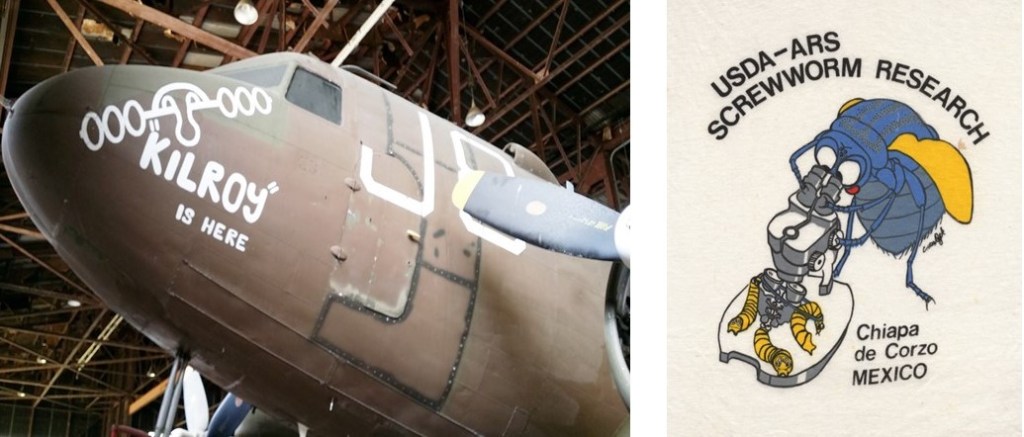
After WWII, atomic agriculture exerted great appeal. Scientists around the world tried to use radiation to hone research, improve seeds, eradicate pests, and fight hunger. In this talk, Dr Thomas Rath will examine this neglected history through an exploration of the international campaign against a notorious pest: the “screwworm” fly, whose flesh-eating larvae kill livestock, wild mammals, and occasionally humans. From the 1950s to the 1990s, the US and Mexican governments bred billions of sterile flies in factories, dropped them from airplanes, faced bafflement and opposition, but eventually eradicated screwworm in North America. It will be argued that this campaign was not simply a product of US power and knowledge. Mexican officials actively shaped it, aided by their own projects of modernization; diplomatic leverage provided by a shared border; and the political and institutional foundations laid by earlier conflicts over disease. Mexico’s experience can help explain why some projects of atomic agriculture succeeded, and others did not.
Dr Thomas Rath is Associate Professor in Latin American History at University College London (UCL). He was educated at UCL, Oxford and Columbia and works on the political, social, military, and environmental history of modern Latin America, particularly Mexico. He is the author of several publications, most recently The Dread Plague and the Cow Killers: The Politics of Animal Disease in Mexico and the World (Cambridge University Press, 2022) that tells the story of an international campaign against a massive outbreak of animal disease in Cold War Mexico.
Chair:Dr Graciela Iglesias-Rogers (University of Winchester).
Everybody is welcome. Book your tickets HERE (including for accessing the Teams link).
Tickets are FREE for all members of the University of Winchester (please register with your university email address) and MHRC subscribers (information on how to subscribe here). Otherwise, Individual entry cost £6 and £3 for concession.
—————–
🙏 Do you want to help us to stand for the pursuance of innovative, rigorous, and independent research in Modern History made accessible to all? Consider giving a Donation (no matter how small), follow our YouTube channel and share this email with colleagues or students who might be interested in the future of Modern History research. And if you don’t receive it yet, ask to join our mailing list at MHRC@winchester.ac.uk
—————————
CFP – Working Paper Series / Hispanic-Anglosphere (EN / ES)
We are calling proposals for the Working Papers Series which is one of the means to join our international network. All details in English and in Spanish below.
The articles in the Working Paper Series on the Hispanic-Anglosphere constitute “work in progress”. They can be papers prepared for conferences, seminars or simply drafts for any other academic output. They are published to stimulate discussion and contribute to the advancement of our knowledge of the Hispanic-Anglosphere. Contributions are accepted in both English and Spanish. The series aims to accelerate the public availability of the research undertaken by our international research network. Working Papers are submitted to one layer of single-blind peer review, but mainly to offer quick, constructive feedback to the author. Those accepted for publication are granted a permanent and unique identifier (DOI) that enables their recognition by academic and scientific platforms as well as made available in electronic form (pdf) in the network’s online platform.
Proposals are invited for contributions on topics relating to one or more of this wide range of themes: the arts; education; exile and migration; family and friends; Non-for-Profit Organizations (charity, philanthropy, civic associations, etc); peace and diplomacy; politics; press, journalism and the media; religion and philosophy; science, medicine and technology; sports; trade and investment; translation; travel and tourism; wildlife, nature & the environment; war and the military.
Particularly welcomed are working papers touching on issues relating to nature, wildlife and heritage conservation and any case of social activism, perhaps in relation to religious toleration, freedom of press and of trade, gender equality, the democratization of education and of knowledge exchange, and the advocacy of natural sustainability to mention just a few examples.
If you are interested in proposing a Working Paper, please send us an email with a proposed title and a 200-250 word abstract to hispanicanglosphere@gmail.com with copy to Dr Graciela Iglesias-Rogers (g.iglesiasrogers@winchester.ac.uk).
To learn more about the work of the Hispanic-Anglosphere research network visit our website http://hispanic-anglosphere.com where you will find examples of Working Papers, among many other outputs and resources.
—————————————————————–
The Hispanic-Anglosphere: transnational networks, global communities (late 18th-20th centuries)
Working Papers Series: Convocatoria de propuestas
The Hispanic-Anglosphere (transnational networks, global communities (late 18th-20th centuries) es una red de investigación internacional que estudia el entrelazamiento de los mundos anglo e hispánicos, particularmente en relación con las Islas Británicas (Cornualles, Inglaterra, Irlanda, Escocia, Gales, las Islas del Canal de la Mancha y la Isla de Man). El foco es puesto sobre las actividades de las personas que en las Islas Británicas estuvieron vinculadas al mundo hispánico (la Europa española, las Américas, el África y el Asia españolas) así como las que llegaron del mundo hispánico a cualquier punto de las Islas Británicas como visitantes, exiliados y/o migrantes en un período marcado por desastres naturales, la dislocación de gobiernos globales, la construcción del estado-nación y el surgimiento del nacionalismo (finales del siglo XVIII a principios del siglo XX).
Los artículos de la Working Papers Series (Serie de Documentos de Trabajo) constituyen “trabajo en proceso”. Pueden ser artículos preparados para congresos, seminarios o simplemente borradores para cualquier otra producción académica. Se publican para estimular la discusión y contribuir al avance de nuestro conocimiento de la Hispanic-Anglosphere (Anglósfera hispánica). Se aceptan contribuciones tanto en inglés como en castellano. La serie tiene como objetivo acelerar la disponibilidad pública de la investigación realizada por nuestra red de investigación internacional. Los Working Papers pasan por un proceso de single-blind peer review (revisión por pares simple ciego) con el único objetivo de ofrecer comentarios rápidos y constructivos al autor. A los Working Papers aceptados para publicación se les otorga un identificador permanente y único (DOI) que permite su reconocimiento por parte de plataformas académicas y científicas, además de ser puestos en acceso abierto en forma electrónica (pdf) en la plataforma online de la red.
La convocatoria está abierta para artículos sobre temas relacionados con uno o más de esta amplia gama de temas: las artes; educación; exilio y migración; familias y amigos; organizaciones sin fines de lucro (caridad, filantropía, asociaciones cívicas, etc.); paz y diplomacia; política; prensa, periodismo y medios de comunicación; religión y filosofía; ciencia, medicina y tecnología; deportes; comercio e inversión; traducción; viaje y turismo; vida silvestre, naturaleza y el medio ambiente; conflictos bélicos y el mundo militar.
Particularmente bienvenidos son trabajos que abordan temas relacionados con la naturaleza, la conservación de la vida silvestre y del patrimonio cultural y cualquier caso de activismo social, tal vez en relación con la tolerancia religiosa, la libertad de prensa y de comercio, la igualdad de género, la democratización de la educación, el intercambio de conocimientos, y la defensa de la sustentabilidad natural, por dar sólo algunos ejemplos.
Para proponer un Working Paper, envíanos un correo electrónico con un título y un resumen de 200-250 palabras a hispanicanglosphere@gmail.com con copia a la Dra. Graciela Iglesias-Rogers (g.iglesiasrogers@winchester.ac.uk ).
Para obtener más información sobre el trabajo de nuestra red, visita el sitio web http://hispanic-anglosphere.com , donde encontrarás ejemplos de Working Papers, entre muchas otras publicaciones y recursos.
—————————————————————–
You can also download a full pdf copy of this CFB here.
CFP – Conference on Anglo-Argentine relations XIX and XX centuries (in Spanish)
The colleagues of the Programa de Estudios sobre la Comunidad Británica en América Latina at the Universidad de San Andrés in Argentina are making a Call for Papers for a conference (jornadas) to take place on Thursday 9 November. The deadline for submissions (in Spanish) is 9 October 2023. Below is a copy of the flyer, but for more information, email: pecbal@udesa.edu.ar

High-quality research free to all
Great news! A good part of our first book The Hispanic-Anglosphere from the Eighteenth to the Twentieth Century – An Introduction (New York and London: Routledge, 2021) is now available in open access thanks to generous funding provided by the University of Winchester.
This covers 4 chapters and the section including 25 biographies of key individuals selected under the sole criteria that they should be non-canonical figures and that their experiences could provide evidence relating to a wide spectrum of topics and thematic areas such as trade, the military, journalism, education, science; emancipation movements; anti-slavery; activism; biodiversity; the arts; translation among many other, plus over half-a-dozen examples of material culture (prints, manuscripts, objects, images, locations) as indicated below.
Please feel free to include these outputs in your teaching, research, outreach activities and to distribute them widely (just click on the titles to access the pdf files).
- Introduction: What is the Hispanic-Anglosphere? Concepts, methods, and public engagement / Graciela Iglesias-Rogers
- Chapter 1 (Section 1) Spanish ‘colonies’: a term forged in the Hispanic-Anglosphere / Graciela Iglesias-Rogers and José Brownrigg-Gleeson Martínez
- Chapter 5 (Section 1) Love, prejudice, pandemics, and global entrepreneurship: William ‘Guillermo’ Gibbs’s long route to Tyntesfield / Graciela Iglesias-Rogers
- Biographies (Section 2) / Gregorio Alonso, Andrés Baeza Ruz; José Brownrigg-Gleeson Martínez, Helen Cowie, Cristina Erquiaga Martínez, Ana Carpintero Fernández, Agustín Guimerá-Ravina, Graciela Iglesias-Rogers, Lesley Kinsley, Manuel Llorca-Jaña, Juan I. Neves-Sarriegui, Arturo Zoffmann Rodriguez
- Material culture: prints, manuscripts, objects, images, locations (Section 2)/ Andrés Baeza Ruz; José Brownrigg-Gleeson Martínez; Cristina Erquiaga Martínez, Graciela Iglesias-Rogers, Manuel Llorca-Jaña.
- Afterword: The way ahead / Graciela Iglesias-Rogers
All this material has been made open access with licence CC BY-NC-ND that allows users to copy and distribute the material in any medium or format in unadapted form only, for non-commercial purposes, and only so long as attribution is given to the creator.
Enjoy!!
Spies, soldiers, a translator and much more
We’ve got three new fascinating biographies in the Individuals section, all penned by our colleague Rodrigo Escribano Roca: George Dawson Flinter (1796-1838); John [Juan] Mackenna (1771–1814) and his most famous grandson Benjamín Vicuña Mackenna (1831–1886).
If you are looking for a good read, you will not be disappointed – the lives of these key men in the Hispanic-Anglosphere were full of adventures, setbacks, acts of heroism, treachery and redemption.
Enjoy!
Video: “Spanish America in the political cultures of Spain and the United Kingdom (1824-1850)”
If you missed the talk ““Spanish America in the political cultures of Spain and the United Kingdom (1824-1850)” by Dr Rodrigo Escribano Roca organized by the Modern History Research Centre of the University of Winchester (MHRC) in partnership with the Hispanic-Anglosphere project, below is the video. Enjoy!
For more information on the Modern History Research Centre, visit their page (click on the image):

TODAY: “Spanish America in the political cultures of Spain and the UK (1824-1850)”
Date: TODAY 16:30-18:00 (UK Time)
Location: online – click HERE to access the Teams link
“Spanish America in the political cultures of Spain and the United Kingdom (1824-1850)”.
Speaker: Dr Rodrigo Escribano Roca (Universidad Adolfo Ibañez, Chile)
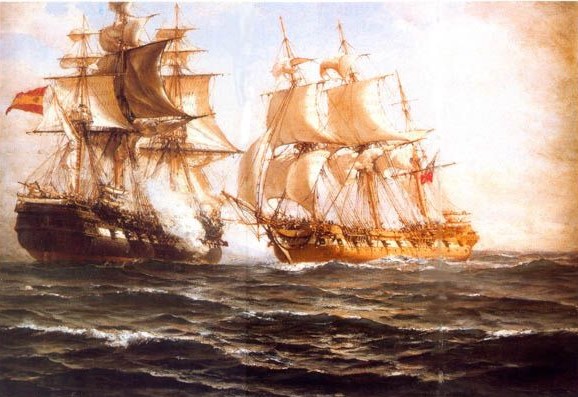
In this talk organized by the Modern History Research Centre of the University of Winchester (MHRC) in partnership with the Hispanic-Anglosphere project, Dr Rodrigo Escribano Roca will introduce his latest book Memorias del viejo imperio. Hispanoamérica en las culturas políticas de España y el Reino Unido (1824-1850) (Madrid: Marcial Pons, 2022) – a study of the impact of Spanish American independence on the political cultures of Spain and the United Kingdom. The disintegration of the Spanish Monarchy in the Americas in the nineteenth century affected two European powers with great intensity. The first was Spain itself, an intercontinental monarchy that transformed into a peninsular state with island possessions. The second was the British Empire that, our speaker argues, had a foreign policy that contributed to emancipate the Hispanic dominions and to incorporate them into its sphere of influence. The book analyses the political thinking in Spain and the United Kingdom during the transitional period following the Atlantic Revolutions (1824-1850). In so doing, it aims to dissect the exercises of mythification of the Spanish Monarchy’s overseas past and the interpretations of the republican developments that took place in Spanish America after the revolutionary schism. The book explains how the ideologized memory of the imperial crisis encouraged Spanish, British and Irish intellectuals to produce knowledge, binding myths, and geopolitical expectations. These myths and expectations were not purely consensual: there was no single Spanish memory or British interpretation of the imperial crisis. Instead, he encountered a kaleidoscope of polemical visions intertwined with a substratum of romanticism, nationalism, and imperialism that responded to the diverse ideological projects of absolutists, moderates, progressives, demo-republicans, socialists, Whigs, Tories, and radicals. The book helps to shed light on the importance of the Spanish-American emancipations in forging the political cultures of both monarchies.
Rodrigo Escribano Roca is Director of the Centre of American Studies at the Universidad Adolfo Ibáñez in Chile. In 2019, he was awarded a doctorate in Philosophy at the School of Humanities and Communications Arts, Western Sydney University, Australia and a similar degree under the banner ‘Latin America and the European Union in the International Context’ by the Instituto Universitario de Investigación en Estudios Latinoamericanos (IELAT), Universidad de Alcalá, Spain. He is Head Researcher of the Chilean Fondecyt (Fondo Nacional de Desarrollo Científico y Tecnológico) Project No. 11200245 “The Pacific Expedition and the Spanish-South American War in the geopolitical imaginaries of liberal Spain (1860-1866)”. He has also published various articles in prestigious journals, such as the Journal of Spanish Cultural Studies, Anuario de Estudios Americanos, Historia Constitucional and Philosophia.
Discussant: Dr James Sanders, Director of Graduate Studies (Utah State University)
Chair: Dr Graciela Iglesias-Rogers, convenor MHRC (University of Winchester)
This event is free and open to the public
For more information, please email MHRC@winchester.ac.uk
TOMORROW: “Spanish America in the political cultures of Spain and the UK (1824-1850)”
Date: TOMORROW Wednesday 16:30-18:00 (UK Time)
Location: online – click HERE to access the Teams link
“Spanish America in the political cultures of Spain and the United Kingdom (1824-1850)”.
Speaker: Dr Rodrigo Escribano Roca (Universidad Adolfo Ibañez, Chile)
In this talk organized by the Modern History Research Centre of the University of Winchester (MHRC) in partnership with the Hispanic-Anglosphere project, Dr Rodrigo Escribano Roca will introduce his latest book Memorias del viejo imperio. Hispanoamérica en las culturas políticas de España y el Reino Unido (1824-1850) (Madrid: Marcial Pons, 2022) – a study of the impact of Spanish American independence on the political cultures of Spain and the United Kingdom. The disintegration of the Spanish Monarchy in the Americas in the nineteenth century affected two European powers with great intensity. The first was Spain itself, an intercontinental monarchy that transformed into a peninsular state with island possessions. The second was the British Empire that, our speaker argues, had a foreign policy that contributed to emancipate the Hispanic dominions and to incorporate them into its sphere of influence. The book analyses the political thinking in Spain and the United Kingdom during the transitional period following the Atlantic Revolutions (1824-1850). In so doing, it aims to dissect the exercises of mythification of the Spanish Monarchy’s overseas past and the interpretations of the republican developments that took place in Spanish America after the revolutionary schism. The book explains how the ideologized memory of the imperial crisis encouraged Spanish, British and Irish intellectuals to produce knowledge, binding myths, and geopolitical expectations. These myths and expectations were not purely consensual: there was no single Spanish memory or British interpretation of the imperial crisis. Instead, he encountered a kaleidoscope of polemical visions intertwined with a substratum of romanticism, nationalism, and imperialism that responded to the diverse ideological projects of absolutists, moderates, progressives, demo-republicans, socialists, Whigs, Tories, and radicals. The book helps to shed light on the importance of the Spanish-American emancipations in forging the political cultures of both monarchies.
Rodrigo Escribano Roca is Director of the Centre of American Studies at the Universidad Adolfo Ibáñez in Chile. In 2019, he was awarded a doctorate in Philosophy at the School of Humanities and Communications Arts, Western Sydney University, Australia and a similar degree under the banner ‘Latin America and the European Union in the International Context’ by the Instituto Universitario de Investigación en Estudios Latinoamericanos (IELAT), Universidad de Alcalá, Spain. He is Head Researcher of the Chilean Fondecyt (Fondo Nacional de Desarrollo Científico y Tecnológico) Project No. 11200245 “The Pacific Expedition and the Spanish-South American War in the geopolitical imaginaries of liberal Spain (1860-1866)”. He has also published various articles in prestigious journals, such as the Journal of Spanish Cultural Studies, Anuario de Estudios Americanos, Historia Constitucional and Philosophia.
Discussant: Dr James Sanders, Director of Graduate Studies (Utah State University)
Chair: Dr Graciela Iglesias-Rogers, convenor MHRC (University of Winchester)
This event is free and open to the public
For more information, please email MHRC@winchester.ac.uk
Event: “Spanish America in the political cultures of Spain and the UK (1824-1850)”
Date: Wednesday 14 December 16:30-18:00 (UK Time)
Location: online – click HERE to access the Teams link
“Spanish America in the political cultures of Spain and the United Kingdom (1824-1850)”.
Speaker: Dr Rodrigo Escribano Roca (Universidad Adolfo Ibañez, Chile)
In this talk organized by the Modern History Research Centre of the University of Winchester (MHRC) in partnership with the Hispanic-Anglosphere project, Dr Rodrigo Escribano Roca will introduce his latest book Memorias del viejo imperio. Hispanoamérica en las culturas políticas de España y el Reino Unido (1824-1850) (Madrid: Marcial Pons, 2022) – a study of the impact of Spanish American independence on the political cultures of Spain and the United Kingdom. The disintegration of the Spanish Monarchy in the Americas in the nineteenth century affected two European powers with great intensity. The first was Spain itself, an intercontinental monarchy that transformed into a peninsular state with island possessions. The second was the British Empire that, our speaker argues, had a foreign policy that contributed to emancipate the Hispanic dominions and to incorporate them into its sphere of influence. The book analyses the political thinking in Spain and the United Kingdom during the transitional period following the Atlantic Revolutions (1824-1850). In so doing, it aims to dissect the exercises of mythification of the Spanish Monarchy’s overseas past and the interpretations of the republican developments that took place in Spanish America after the revolutionary schism. The book explains how the ideologized memory of the imperial crisis encouraged Spanish, British and Irish intellectuals to produce knowledge, binding myths, and geopolitical expectations. These myths and expectations were not purely consensual: there was no single Spanish memory or British interpretation of the imperial crisis. Instead, he encountered a kaleidoscope of polemical visions intertwined with a substratum of romanticism, nationalism, and imperialism that responded to the diverse ideological projects of absolutists, moderates, progressives, demo-republicans, socialists, Whigs, Tories, and radicals. The book helps to shed light on the importance of the Spanish-American emancipations in forging the political cultures of both monarchies.
Rodrigo Escribano Roca is Director of the Centre of American Studies at the Universidad Adolfo Ibáñez in Chile. In 2019, he was awarded a doctorate in Philosophy at the School of Humanities and Communications Arts, Western Sydney University, Australia and a similar degree under the banner ‘Latin America and the European Union in the International Context’ by the Instituto Universitario de Investigación en Estudios Latinoamericanos (IELAT), Universidad de Alcalá, Spain. He is Head Researcher of the Chilean Fondecyt (Fondo Nacional de Desarrollo Científico y Tecnológico) Project No. 11200245 “The Pacific Expedition and the Spanish-South American War in the geopolitical imaginaries of liberal Spain (1860-1866)”. He has also published various articles in prestigious journals, such as the Journal of Spanish Cultural Studies, Anuario de Estudios Americanos, Historia Constitucional and Philosophia.
Discussant: Dr James Sanders, Director of Graduate Studies (Utah State University)
Chair: Dr Graciela Iglesias-Rogers, convenor MHRC (University of Winchester)
This event is free and open to the public
For more information, please email MHRC@winchester.ac.uk
TODAY: Hispanic-Anglosphere @ Oxford
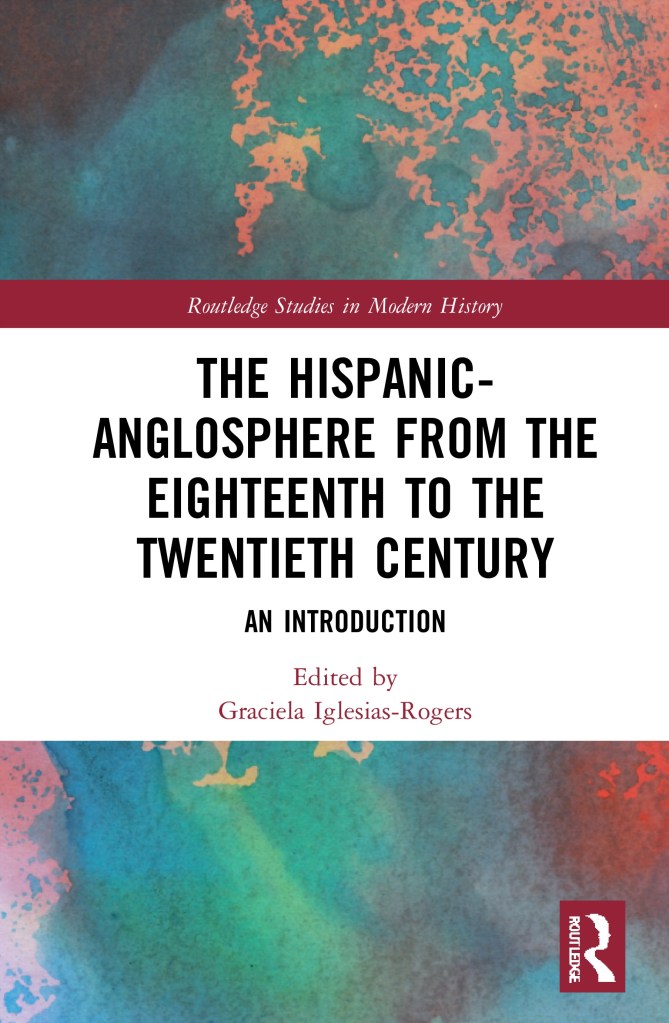
Join us TODAY in a tertulia in hybrid form (online and in person) organized by the Latin American History Seminar at the University of Oxford to discuss our book The Hispanic-Anglosphere from the Eighteenth to the Twentieth Century – An Introduction (New York and London: Routledge, 2021) from 17:00 to 18:30 (UK time).
Speakers: Dr Graciela Iglesias-Rogers (University of Winchester) editor and author; Prof. Helen Cowie (University of York), author; and Juan Ignacio Neves Sarriegui (University of Oxford), author.
Discussant: Prof. David Rock (Professor Emeritus University California Santa Barbara).
The event is free and open to the public, and you can attend either in person at the Latin American Centre Main Seminar Room, 1 Church Walk, Oxford OX2 6LY or online, but registration is required (click here). After registering, you will receive a confirmation email containing information about joining the meeting. Notes on speakers and discussants below.
Notes on speakers and discussant:
Graciela Iglesias-Rogers is Senior Lecturer in Modern European and Global Hispanic History at the University of Winchester and lead researcher of the AHRC-funded international research network project ‘The Hispanic Anglosphere: Transnational networks and global communities (18th – 20th centuries)‘ in partnership with The National Trust (Tyntesfield) and the Centre of American Studies at the Universidad Adolfo Ibáñez in Chile. She embarked on academia after life as a Reuters fellow with a long career in journalism, including as Chief European correspondent for the Argentine broadsheet La Nación. At Oxford, she read for a BA degree in History (St. Hilda’s College) followed by a DPhil in Modern History (Lady Margaret Hall). She subsequently held various positions as tutor, lecturer, and researcher (Hertford College, St. Peter’s College, Faculty of History). Her latest publications include ‘The dislocation of the global Hispanic world’, in Alan Forrest and Peter Hicks, eds. The New Cambridge History of the Napoleonic Wars, Volume 3. Experience, Culture and Memory (Cambridge: Cambridge University Press, 2022); (ed.), The Hispanic-Anglosphere from the Eighteenth to the Twentieth Century – An Introduction (New York and London: Routledge, 2021); with D. Hook (eds), Translations in times of disruption: an interdisciplinary study in transnational contexts (Basingstoke: Palgrave, 2017) and British liberators in the age of Napoleon: volunteering under the Spanish flag in the Peninsular War (Bloomsbury: London and New York, 2014).
Juan Neves Sarriegui is DPhil Candidate in History at the University of Oxford. His thesis project ‘Revolution in the Rio de la Plata: Political Culture and Periodical Press, c. 1780-1830’ explores the changes in political life and print culture brought about by the independence movement in present-day Argentina and Uruguay. His has been the ‘Norman Hargreaves-Mawdsley’ scholar at Wolfson College, Oxford (2018-2022) and a DAAD (German Academic Exchange Service) doctoral visiting student at the Institute of Latin American Studies, Free University of Berlin (2022). Currently, he is the Project Manager and Member of the Steering Committee of the AHRC-funded Research Network ‘Reframing the Age of Revolutions, 1750-1850’. He has co-edited a special virtual issue of the Past & Present Journal and published in the collective volume The Hispanic-Anglosphere: an Introduction (2021) edited by Graciela Iglesias-Rogers.
Helen Cowie is Professor of History at the University of York. Her research focuses on the history of animals and the history of natural history. She is author or Conquering Nature in Spain and its Empire, 1750-1850 (2011), Exhibiting Animals in Nineteenth-Century Britain: Empathy, Education, Entertainment (2014) and Llama (2017). Her most recent book, Victims of Fashion: Animal Commodities in Victorian Britain, was published by Cambridge University Press in 2021 and examines 6 luxury animal commodities consumed in the Victorian period. Her work on alpaca wool stems from this wider project.
David Rock is Professor of History Emeritus at the University of California, Santa Barbara and currently Senior Research Associate at the Centre of Latin American Studies, University of Cambridge, where he completed a PhD in 1971. He has written extensively on nineteenth and twentieth century Argentina including several works in Spanish translation. His book Politics in Argentina 1890-1930: the Rise and Fall of Radicalism (Cambridge) was published in 1975. A first edition of Argentina 1516-1982. From Spanish Colonization to the Falklands War (University of California Press) appeared in 1985; Authoritarian Argentine: the Nationalist Movement, its History and its Impact (California) was published in 1992; State Building and Political Movements in Argentina, 1860-1916 (Stanford) was published in 2002; and, The British in Argentina, Commerce, Settlers and Power, 1800-2000 (Palgrave Macmillan) appeared in 2018.
Tomorrow: Hispanic-Anglosphere @ Oxford
Just a quick reminder that you are most welcome to join us in a tertulia in hybrid form (online and in person) organized by the Latin American History Seminar at the University of Oxford to discuss our book The Hispanic-Anglosphere from the Eighteenth to the Twentieth Century – An Introduction (New York and London: Routledge, 2021) TOMORROW Thursday 17th November, 17:00-18:30 (UK time).
Speakers: Dr Graciela Iglesias-Rogers (University of Winchester) editor and author; Prof. Helen Cowie (University of York), author; and Juan Ignacio Neves Sarriegui (University of Oxford), author.
Discussant: Prof. David Rock (Professor Emeritus University California Santa Barbara).
The event is free and open to the public, and you can attend either in person at the Latin American Centre Main Seminar Room, 1 Church Walk, Oxford OX2 6LY or online, but registration is required (click here). After registering, you will receive a confirmation email containing information about joining the meeting. Notes on speakers and discussants below.
Notes on speakers and discussant:
Graciela Iglesias-Rogers is Senior Lecturer in Modern European and Global Hispanic History at the University of Winchester and lead researcher of the AHRC-funded international research network project ‘The Hispanic Anglosphere: Transnational networks and global communities (18th – 20th centuries)‘ in partnership with The National Trust (Tyntesfield) and the Centre of American Studies at the Universidad Adolfo Ibáñez in Chile. She embarked on academia after life as a Reuters fellow with a long career in journalism, including as Chief European correspondent for the Argentine broadsheet La Nación. At Oxford, she read for a BA degree in History (St. Hilda’s College) followed by a DPhil in Modern History (Lady Margaret Hall). She subsequently held various positions as tutor, lecturer, and researcher (Hertford College, St. Peter’s College, Faculty of History). Her latest publications include ‘The dislocation of the global Hispanic world’, in Alan Forrest and Peter Hicks, eds. The New Cambridge History of the Napoleonic Wars, Volume 3. Experience, Culture and Memory (Cambridge: Cambridge University Press, 2022); (ed.), The Hispanic-Anglosphere from the Eighteenth to the Twentieth Century – An Introduction (New York and London: Routledge, 2021); with D. Hook (eds), Translations in times of disruption: an interdisciplinary study in transnational contexts (Basingstoke: Palgrave, 2017) and British liberators in the age of Napoleon: volunteering under the Spanish flag in the Peninsular War (Bloomsbury: London and New York, 2014).
Juan Neves Sarriegui is DPhil Candidate in History at the University of Oxford. His thesis project ‘Revolution in the Rio de la Plata: Political Culture and Periodical Press, c. 1780-1830’ explores the changes in political life and print culture brought about by the independence movement in present-day Argentina and Uruguay. His has been the ‘Norman Hargreaves-Mawdsley’ scholar at Wolfson College, Oxford (2018-2022) and a DAAD (German Academic Exchange Service) doctoral visiting student at the Institute of Latin American Studies, Free University of Berlin (2022). Currently, he is the Project Manager and Member of the Steering Committee of the AHRC-funded Research Network ‘Reframing the Age of Revolutions, 1750-1850’. He has co-edited a special virtual issue of the Past & Present Journal and published in the collective volume The Hispanic-Anglosphere: an Introduction (2021) edited by Graciela Iglesias-Rogers.
Helen Cowie is Professor of History at the University of York. Her research focuses on the history of animals and the history of natural history. She is author or Conquering Nature in Spain and its Empire, 1750-1850 (2011), Exhibiting Animals in Nineteenth-Century Britain: Empathy, Education, Entertainment (2014) and Llama (2017). Her most recent book, Victims of Fashion: Animal Commodities in Victorian Britain, was published by Cambridge University Press in 2021 and examines 6 luxury animal commodities consumed in the Victorian period. Her work on alpaca wool stems from this wider project.
David Rock is Professor of History Emeritus at the University of California, Santa Barbara and currently Senior Research Associate at the Centre of Latin American Studies, University of Cambridge, where he completed a PhD in 1971. He has written extensively on nineteenth and twentieth century Argentina including several works in Spanish translation. His book Politics in Argentina 1890-1930: the Rise and Fall of Radicalism (Cambridge) was published in 1975. A first edition of Argentina 1516-1982. From Spanish Colonization to the Falklands War (University of California Press) appeared in 1985; Authoritarian Argentine: the Nationalist Movement, its History and its Impact (California) was published in 1992; State Building and Political Movements in Argentina, 1860-1916 (Stanford) was published in 2002; and, The British in Argentina, Commerce, Settlers and Power, 1800-2000 (Palgrave Macmillan) appeared in 2018.
 The Hispanic-Anglosphere ...