The Hispanic-Anglosphere …
A research network of scholars and non-academic partners from all around the world who are tracing curious and long-enduring entanglements of the global Hispanic and Anglo worlds, particularly in relation to the British Isles (Cornwall, England, Ireland, Scotland, Wales, the Channel Islands and the Isle of Man)
Online event from Chile – Tomorrow 14:30 UK
A last reminder for your agenda: you are most welcome to attend this hybrid workshop designed to showcase the work of early career researchers relating to the Hispanic-Anglosphere to take place at the Universidad Adolfo Ibañez (Chile) and in Zoom. [Versión en castellano al pie]
TUESDAY 3, SEPTEMBER
09:30-11.30 (CHILE) 14:30-16:30 (UK) 15:30 – 17:30 (MAIN EUROPE)
“NEW INSIGHTS INTO THE HISPANIC-ANGLOSPHERE”
Zoom link: https://uai-cl.zoom.us/j/99309601126
09:30 (Chile) 14:30 (UK). Welcome by organizing committee, Dr Andrés Baeza-Ruz (Universidad Adolfo Ibañez), Dr Graciela Iglesias-Rogers (University of Winchester), Dr. Rodrigo Escribano (Universidad Adolfo Ibañez)
9:45 (Chile) 14:45 (UK). “The Hispanic-Anglosphere as a Knowledge Bridge between South America and the German States: Translation cases from the Duchy of Sachsen-Weimar-Eisenach (1816-1826)”. Speaker: Claudio Soltmann (Johannes Gutenberg Universität Mainz/Germersheim)
10:15 (Chile) 15:15 (UK). Q&A session
10:30 (Chile) 15:30 (UK). “The Patriotic Mobilization of the British Community in Chile During World War II: A Network of Transnational Collaboration from South America”. Speaker: Roberto Pérez Castro (Universidad de San Sebastián).
11:00 (Chile) 16:00 (UK). Q&A session and general concluding discussion.
The event is free and no booking is required. Everybody is welcome.
The critical conceptual framework the ‘Hispanic-Anglosphere’ challenges old assumptions of enmity and isolation through the study of individuals, networks and communities that made of the British Isles a crucial hub for the global Hispanic world and a bridge between Spanish Europe, Spanish Africa, Spanish Asia and the Americas at a period that, perhaps not unlike today, was marked by natural disasters, the dislocation of global polities, nation-state building and the rise of nationalism (late 18th to early 20th centuries). More information HERE.
‘’’’’’’’’’’’’’’’’’’’’’’’
Versión en castellano
Todos están cordialmente invitados a asistir a este taller híbrido diseñado para compartir el trabajo de investigadores en la etapa inicial de la carrera académica que trabajan en temas relacionados con la Hispanic-Anglosphere (Anglósfera Hispánica) y que tendrá lugar en la Universidad Adolfo Ibañez (Chile) y en Zoom.
MARTES 3 SEPTIEMBRE
09:30-11.30 (CHILE) 14:30-18:30 (UK) 15:30 – 17:30 (CONTINENTE EUROPEO)
“NUEVOS ESTUDIOS SOBRE LA HISPANIC-ANGLOSPHERE”
Zoom link: https://uai-cl.zoom.us/j/99309601126
09:30 (Chile) 14:30 (UK). Bienvenida del comité organizador, Dr Andrés Baeza-Ruz (Universidad Adolfo Ibañez), Dr Graciela Iglesias-Rogers (University of Winchester), Dr. Rodrigo Escribano (Universidad Adolfo Ibañez)
9:45 (Chile) 14:45 (UK). “La Hispanic-Anglosphere (Anglósfera hispánica) como puente de conocimiento entre Sudamérica y los Estados alemanes: casos de traducción del Ducado de Sajonia-Weimar-Eisenach (1816-1826)”. Disertante: Claudio Soltmann (Johannes Gutenberg Universität Mainz/Germersheim)
10:15 (Chile) 15:15 (UK). Sesión de preguntas y respuestas
10:30 (Chile) 15:30 (UK). “La Movilización Patriótica de la Comunidad Británica en Chile Durante la Segunda Guerra Mundial: una Red de Colaboración Transnacional de Sudamérica”. Disertante: Roberto Pérez Castro (Universidad de San Sebastián).
11:00 (Chile) 16:00 (UK). Sesión de preguntas y respuestas con discusión general final
Este evento es gratuito y no hace falta registrarse con anticipación. Todos son bienvenidos.
El concepto crítico de la “Hispanic-Anglosphere” (Anglósfera hispánica) desafía viejos supuestos de enemistad y aislamiento mediante el estudio de los individuos, las redes y las comunidades que hicieron de las Islas Británicas (Inglaterra, Irlanda, Escocia, Gales, las Islas del Canal de la Mancha y la Isla de Man) un centro crucial para el mundo hispánico global y un puente entre la Europa, las Américas, el África y el Asia españolas en un período que, tal vez no muy diferente al actual, estuvo marcado por desastres naturales, la dislocación de gobiernos globales, la construcción de Estados-nación y el surgimiento del nacionalismo (finales del siglo XVIII y principios del XX). Más información AQUÍ.
Online event from Chile – Tuesday 14:30 UK
You are most welcome to attend this hybrid workshop designed to showcase the work of early career researchers relating to the Hispanic-Anglosphere to take place at the Universidad Adolfo Ibañez (Chile) and in Zoom. [Versión en castellano al pie]
TUESDAY 3, SEPTEMBER
09:30-11.30 (CHILE) 14:30-16:30 (UK) 15:30 – 17:30 (MAIN EUROPE)
“NEW INSIGHTS INTO THE HISPANIC-ANGLOSPHERE”
Zoom link: https://uai-cl.zoom.us/j/99309601126
09:30 (Chile) 14:30 (UK). Welcome by organizing committee, Dr Andrés Baeza-Ruz (Universidad Adolfo Ibañez), Dr Graciela Iglesias-Rogers (University of Winchester), Dr. Rodrigo Escribano (Universidad Adolfo Ibañez)
9:45 (Chile) 14:45 (UK). “The Hispanic-Anglosphere as a Knowledge Bridge between South America and the German States: Translation cases from the Duchy of Sachsen-Weimar-Eisenach (1816-1826)”. Speaker: Claudio Soltmann (Johannes Gutenberg Universität Mainz/Germersheim)
10:15 (Chile) 15:15 (UK). Q&A session
10:30 (Chile) 15:30 (UK). “The Patriotic Mobilization of the British Community in Chile During World War II: A Network of Transnational Collaboration from South America”. Speaker: Roberto Pérez Castro (Universidad de San Sebastián).
11:00 (Chile) 16:00 (UK). Q&A session and general concluding discussion.
The event is free and no booking is required. Everybody is welcome.
The critical conceptual framework the ‘Hispanic-Anglosphere’ challenges old assumptions of enmity and isolation through the study of individuals, networks and communities that made of the British Isles a crucial hub for the global Hispanic world and a bridge between Spanish Europe, Spanish Africa, Spanish Asia and the Americas at a period that, perhaps not unlike today, was marked by natural disasters, the dislocation of global polities, nation-state building and the rise of nationalism (late 18th to early 20th centuries). More information HERE.
‘’’’’’’’’’’’’’’’’’’’’’’’
Versión en castellano
Todos están cordialmente invitados a asistir a este taller híbrido diseñado para compartir el trabajo de investigadores en la etapa inicial de la carrera académica que trabajan en temas relacionados con la Hispanic-Anglosphere (Anglósfera Hispánica) y que tendrá lugar en la Universidad Adolfo Ibañez (Chile) y en Zoom.
MARTES 3 SEPTIEMBRE
09:30-11.30 (CHILE) 14:30-18:30 (UK) 15:30 – 17:30 (CONTINENTE EUROPEO)
“NUEVOS ESTUDIOS SOBRE LA HISPANIC-ANGLOSPHERE”
Zoom link: https://uai-cl.zoom.us/j/99309601126
09:30 (Chile) 14:30 (UK). Bienvenida del comité organizador, Dr Andrés Baeza-Ruz (Universidad Adolfo Ibañez), Dr Graciela Iglesias-Rogers (University of Winchester), Dr. Rodrigo Escribano (Universidad Adolfo Ibañez)
9:45 (Chile) 14:45 (UK). “La Hispanic-Anglosphere (Anglósfera hispánica) como puente de conocimiento entre Sudamérica y los Estados alemanes: casos de traducción del Ducado de Sajonia-Weimar-Eisenach (1816-1826)”. Disertante: Claudio Soltmann (Johannes Gutenberg Universität Mainz/Germersheim)
10:15 (Chile) 15:15 (UK). Sesión de preguntas y respuestas
10:30 (Chile) 15:30 (UK). “La Movilización Patriótica de la Comunidad Británica en Chile Durante la Segunda Guerra Mundial: una Red de Colaboración Transnacional de Sudamérica”. Disertante: Roberto Pérez Castro (Universidad de San Sebastián).
11:00 (Chile) 16:00 (UK). Sesión de preguntas y respuestas con discusión general final
Este evento es gratuito y no hace falta registrarse con anticipación. Todos son bienvenidos.
El concepto crítico de la “Hispanic-Anglosphere” (Anglósfera hispánica) desafía viejos supuestos de enemistad y aislamiento mediante el estudio de los individuos, las redes y las comunidades que hicieron de las Islas Británicas (Inglaterra, Irlanda, Escocia, Gales, las Islas del Canal de la Mancha y la Isla de Man) un centro crucial para el mundo hispánico global y un puente entre la Europa, las Américas, el África y el Asia españolas en un período que, tal vez no muy diferente al actual, estuvo marcado por desastres naturales, la dislocación de gobiernos globales, la construcción de Estados-nación y el surgimiento del nacionalismo (finales del siglo XVIII y principios del XX). Más información AQUÍ.
Online event 3 September from Chile
You are most welcome to attend this hybrid workshop designed to showcase the work of early career researchers relating to the Hispanic-Anglosphere to take place at the Universidad Adolfo Ibañez (Chile) and in Zoom. [Versión en castellano al pie]
TUESDAY 3, SEPTEMBER
09:30-11.30 (CHILE) 14:30-16:30 (UK) 15:30 – 17:30 (MAIN EUROPE)
“NEW INSIGHTS INTO THE HISPANIC-ANGLOSPHERE”
Zoom link: https://uai-cl.zoom.us/j/99309601126
09:30 (Chile) 14:30 (UK). Welcome by organizing committee, Dr Andrés Baeza-Ruz (Universidad Adolfo Ibañez), Dr Graciela Iglesias-Rogers (University of Winchester), Dr. Rodrigo Escribano (Universidad Adolfo Ibañez)
9:45 (Chile) 14:45 (UK). “The Hispanic-Anglosphere as a Knowledge Bridge between South America and the German States: Translation cases from the Duchy of Sachsen-Weimar-Eisenach (1816-1826)”. Speaker: Claudio Soltmann (Johannes Gutenberg Universität Mainz/Germersheim)
10:15 (Chile) 15:15 (UK). Q&A session
10:30 (Chile) 15:30 (UK). “The Patriotic Mobilization of the British Community in Chile During World War II: A Network of Transnational Collaboration from South America”. Speaker: Roberto Pérez Castro (Universidad de San Sebastián).
11:00 (Chile) 16:00 (UK). Q&A session and general concluding discussion.
The event is free and no booking is required. Everybody is welcome.
The critical conceptual framework the ‘Hispanic-Anglosphere’ challenges old assumptions of enmity and isolation through the study of individuals, networks and communities that made of the British Isles a crucial hub for the global Hispanic world and a bridge between Spanish Europe, Spanish Africa, Spanish Asia and the Americas at a period that, perhaps not unlike today, was marked by natural disasters, the dislocation of global polities, nation-state building and the rise of nationalism (late 18th to early 20th centuries). More information HERE.
‘’’’’’’’’’’’’’’’’’’’’’’’
Versión en castellano
Todos están cordialmente invitados a asistir a este taller híbrido diseñado para compartir el trabajo de investigadores en la etapa inicial de la carrera académica que trabajan en temas relacionados con la Hispanic-Anglosphere (Anglósfera Hispánica) y que tendrá lugar en la Universidad Adolfo Ibañez (Chile) y en Zoom.
MARTES 3 SEPTIEMBRE
09:30-11.30 (CHILE) 14:30-18:30 (UK) 15:30 – 17:30 (CONTINENTE EUROPEO)
“NUEVOS ESTUDIOS SOBRE LA HISPANIC-ANGLOSPHERE”
Zoom link: https://uai-cl.zoom.us/j/99309601126
09:30 (Chile) 14:30 (UK). Bienvenida del comité organizador, Dr Andrés Baeza-Ruz (Universidad Adolfo Ibañez), Dr Graciela Iglesias-Rogers (University of Winchester), Dr. Rodrigo Escribano (Universidad Adolfo Ibañez)
9:45 (Chile) 14:45 (UK). “La Hispanic-Anglosphere (Anglósfera hispánica) como puente de conocimiento entre Sudamérica y los Estados alemanes: casos de traducción del Ducado de Sajonia-Weimar-Eisenach (1816-1826)”. Disertante: Claudio Soltmann (Johannes Gutenberg Universität Mainz/Germersheim)
10:15 (Chile) 15:15 (UK). Sesión de preguntas y respuestas
10:30 (Chile) 15:30 (UK). “La Movilización Patriótica de la Comunidad Británica en Chile Durante la Segunda Guerra Mundial: una Red de Colaboración Transnacional de Sudamérica”. Disertante: Roberto Pérez Castro (Universidad de San Sebastián).
11:00 (Chile) 16:00 (UK). Sesión de preguntas y respuestas con discusión general final
Este evento es gratuito y no hace falta registrarse con anticipación. Todos son bienvenidos.
El concepto crítico de la “Hispanic-Anglosphere” (Anglósfera hispánica) desafía viejos supuestos de enemistad y aislamiento mediante el estudio de los individuos, las redes y las comunidades que hicieron de las Islas Británicas (Inglaterra, Irlanda, Escocia, Gales, las Islas del Canal de la Mancha y la Isla de Man) un centro crucial para el mundo hispánico global y un puente entre la Europa, las Américas, el África y el Asia españolas en un período que, tal vez no muy diferente al actual, estuvo marcado por desastres naturales, la dislocación de gobiernos globales, la construcción de Estados-nación y el surgimiento del nacionalismo (finales del siglo XVIII y principios del XX). Más información AQUÍ.
George Peacock: update & call to donate
A descendant of George Peacock (1805-1883) who commanded the first steamships ever to navigate the Strait of Magellan and who is credited with facilitating the development of the Panama railway and canal has kindly provided images that allowed us to update the profile penned by our colleague Lesley Kinsley. Among other things, you’ll be able to see there his walking stick, cut from a tree on the Isthmus of Darien in 1832.
Neil Cookson along with my cousin Chris Barton are currently raising money for the restoration of the Peacock’s family grave in Starcross. For more information on how to donate, visit this website: https://www.gofundme.com/f/cmes5
CFP for hybrid event in Chile (deadline: 14 June)
Early career researchers are particularly encouraged to submit proposals for papers on any topic relating to the Hispanic-Anglosphere for a hybrid event entitled “New insights into the Hispanic-Anglosphere” to take place on Tuesday 3 September at the Cap Von Appen Auditorium, Av. Presidente Errázuriz 3485, Las Condes, Universidad Adolfo Ibañez (Chile) and in Zoom.
Proposals should consist of a title, an abstract of 150-200 words and a short CV of 100-150 words in Spanish or English or in both languages. They need to be emailed by Friday 14 June 2024 to: andres.baeza.r@uai.cl ; g.iglesiasrogers@winchester.ac.uk ; rodrigo.escribano@uai.cl
Below are copies of the posters with the CFP in both English and Spanish with a few more details:
Hispanic-Anglosphere @ Argentina / report
If you missed the “Hispanic-Anglosphere @ Argentina’ organized by the Anglo-Argentine Society on 15th May, here is a link to a detailed report (click on the title):
Hispanic-Anglosphere @ Argentina / London
If you happen to be in London this coming Wednesday, come and join us in this event organized by the Anglo-Argentine Society. All details below…

15th May 2024, 18.00 – 20.15 at the Argentine Ambassador’s Residence, London (49 Belgrave Square London SW1X 8QZ)
Book your ticket here: https://angloargentinesociety.org.uk/event/the-hispanic-anglosphere-argentina/
Speakers: Dr Graciela Iglesias-Rogers (University of Winchester) and Dr Juan I. Neves-Sarriegui (University of Oxford)
We are delighted to welcome Graciela Iglesias-Rogers and Juan I. Neves Sarriegui to the Anglo-Argentine Society for a talk highlighting recent findings of the Hispanic-Anglosphere network in relation to Argentina, expanding on those included in the book The Hispanic-Anglosphere from the Eighteenth to the Twentieth Century – An Introduction, ed. Graciela Iglesias-Rogers (London: Routledge, 2021).
The Hispanic-Anglosphere is an international research network funded by the AHRC and the University of Winchester in partnership with the National Trust Tyntesfield and the Centre of American Studies at the Universidad Adolfo Ibáñez in Chile that studies individuals, networks and communities that made of the British Isles a crucial hub for the global Hispanic world and a bridge between Spanish Europe, Spanish Africa, Spanish Asia and the Americas at a period that, perhaps not unlike today, was marked by natural crises and disasters, the dislocation of global polities, nation-state building and the rise of nationalism.
Join us for an entertaining and insightful evening, accompanied with wine and empanadas.
All money raised from this event will go towards charities in Argentina: Enseña x Argentina y Asociación Cuerpo y Alma. More details here
—-
Graciela Iglesias-Rogers is a Fellow of the Royal Historical Society and Principal Investigator in the international research network project ‘The Hispanic Anglosphere: Transnational networks and global communities (18th – 20th centuries)’ funded by the Arts and Humanities Research Council (AHRC) and the University of Winchester where she is Senior Lecturer in Modern European and Global Hispanic History and currently leads the Modern History Research Centre (MHRC). She is also a former Reuters Fellow with a long career in journalism, mainly as Chief European Correspondent for the Argentine daily La Nación. An Oxford University graduate (St. Hilda’s) and postgraduate (LMH) both as a mature student, her first academic book, British Liberators in the Age of Napoleon: volunteering under the Spanish Flag in the Peninsular War (London and New York: Bloomsbury, 2014) has been followed by other works, including a book co-edited with Prof. David Hook, Translations in Times of Disruption: an interdisciplinary study in transnational contexts (Basingstoke: Palgrave Macmillan, 2017) and The Hispanic-Anglosphere from the Eighteenth to the Twentieth Century – An Introduction, ed. Graciela Iglesias-Rogers (London: Routledge, 2021).
Juan I. Neves Sarriegui is a postdoctoral researcher in the project ‘Latin America and the Global History of Democracy, 1810-1930’ (Oxford History Faculty and the Gerda Henkel Foundation). He completed his DPhil in History also at the University of Oxford. His thesis – ‘Revolution in the Rio de la Plata: Political Culture and Periodical Press, c. 1780-1830’ – explores the changes in political life and print culture brought about by the independence movement in present-day Argentina and Uruguay. He was ‘Norman Hargreaves-Mawdsley’ scholar at Wolfson College, Oxford (2018-2022), a DAAD (German Academic Exchange Service) doctoral visiting student at the Institute of Latin American Studies, Free University of Berlin (2022) and Project Administrator and Member of the Steering Committee of the AHRC Research Network ‘Reframing the Age of Revolutions, 1750-1850’ (2023). He was also co-editor of a special virtual issue of the Past & Present journal and published in the collective volume The Hispanic-Anglosphere from the Eighteenth to the Twentieth Century – An Introduction, ed. Graciela Iglesias-Rogers (London: Routledge, 2021).
CFP: 200 Years of the Treaty between the United Kingdom and the United Provinces of the River Plate (1825-2025)
Many of you will be interested in the following Call for Papers for an event organized by the PECBAL (Programa de Estudios sobre la Comunidad Británica en America Latina – Programme of Studies on the British Community in Latin America) at the Universidad de San Andrés in Argentina to take place in Buenos Aires from 10 to 12 April 2025. Below is a copy of the flyer (more clearly available here). The deadline for abstracts is 25 July and for full draft papers 20 December. For more information, email: pecbal@udesa.edu.ar

New: Henry David O’Shea (1869? – 1913)
Check the intriguing new addition to the biographies in the Individuals section penned by our colleague Laura Díaz Esteve. It’s all about Henry David O’Shea, a publisher, editor, and journalist based in Shanghai who worked as a propagandist for the Spanish authorities of the Philippines during the 1896-1897 phase of the Filipino Revolution…among many other bizarre things!
Hybrid event: “New insights into the paradigm shift in battlefield medicine in WWI”
Hello!
This hybrid event organized by the Modern History Research Centre (MHRC) at the University of Winchester, UK may be of interest to some you….
Date: Wednesday 6 December, 16:30-18:00
Location: St Alphege Building 202, King Alfred quarter, University of Winchester and on Teams / Book your tickets HERE
New insights into the paradigm shift in battlefield medicine in WWI
Speaker: Dominic Hodgson (University of Winchester)
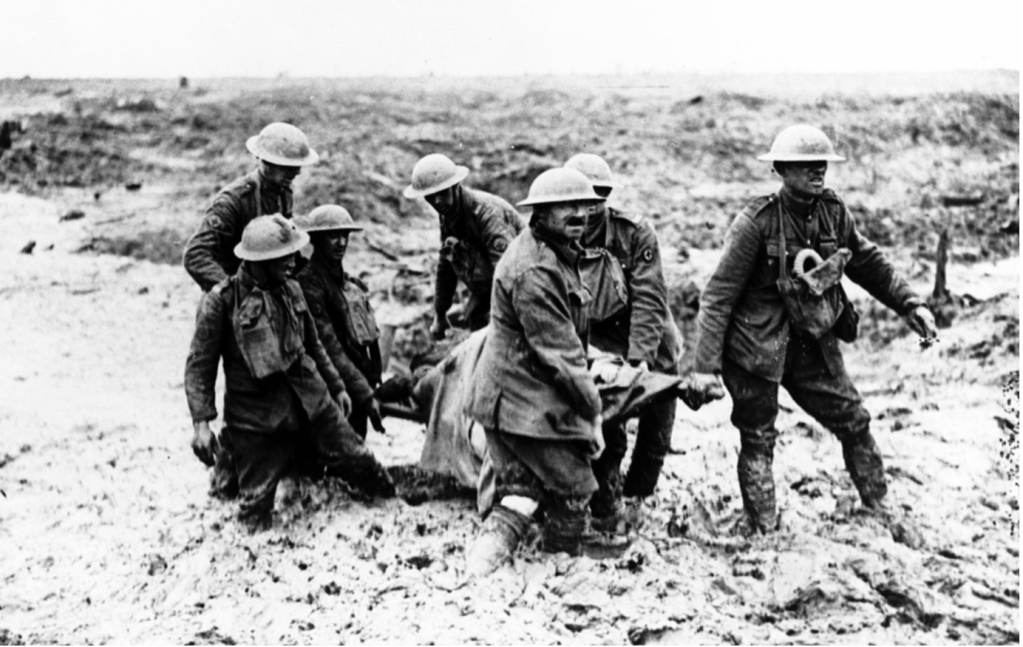
Medicine, it has been said, progressed more in the four years of the First World War than at any other time. In the early stages, antiquated care and ill-preparedness resulted in many deaths from delayed surgery following lengthy transfers, inadequate initial wound care, rudimentary anaesthetic techniques and understanding of the physiological consequences of injuries. This talk will focus on the experience of the surgeon Kenneth Walker (1882-1966) who started his career in the British Hospital of Buenos Aires (Argentina) and later in life became an author and sexual reformer. In 1914, he volunteered to practise in a base hospital in Le Touquet (France) where he was appalled at the condition of men who had endured prolonged evacuation. Later enlisted in the Royal Army Medical Corps, he ran an advanced operating centre close to the Somme battlefield. He transformed the trench management of shattered thighs by improving splinting, which stabilised painful injuries crucially reducing blood loss and resultant shock. From 1917 he was a visiting member of the Shock Committee in London through which study of the physiology of acute wounding and trialling of corrective techniques were co-ordinated. He ran a “shock centre” on the Western Front and working with colleagues from North America he introduced blood transfusion into the army, with subsequent benefits for post-war civilian practice.
Dominic Hodgson is currently a PhD student in History at the University of Winchester, but he is coming from a career in medicine, sharing the same specialty (urology) as Walker whom he has chosen to investigate as a vehicle to throw new light on a wide range of innovations in 20th century medicine, social attitudes, and masculinity.
Chairs: Prof. Chris Aldous (University of Winchester) and Dr Graciela Iglesias-Rogers (University of Winchester).
Everybody is welcome. Book your tickets HERE (including for accessing the Teams link).
Tickets are FREE for all members of the University of Winchester (please register with your university email address) and MHRC subscribers (information on how to subscribe HERE ). Otherwise, Individual entry cost £6 and £3 for concession.
🙏 Do you want to help us to stand for the pursuance of innovative, rigorous, and independent research in Modern History made accessible to all? Consider giving a Donation (no matter how small), follow our YouTube channel and share this email with colleagues or students who might be interested in the future of Modern History research. And if you don’t receive it yet, ask to join our mailing list at MHRC@winchester.ac.uk
Dr Graciela Iglesias-Rogers, Leading Convener
Prof. Chris Aldous, Co-Convener
Dr Emily Stiles, Co-Convener

“Hampshire Days (1903)”: wildlife activism…” – Recording now available
If you missed last week’s MHRC event: “Hampshire Days (1903)’: wildlife and rural activism from the Hispanic-Anglosphere” the recording is now available HERE
You may be also interested in this hybrid event that is coming up:
Date: Wednesday 22nd November, 16:30-18:00
Location:St Alphege Building 202, King Alfred quarter, University of Winchester and on Teams – Book your Tickets HERE
Atomic Agriculture and Insects in Mexico (1950s-1990s)
Speaker: Dr Thomas Rath (UCL)
Click on the title for more information or email mhrc@winchester.ac.uk
TOMORROW: W. H. Hudson and wildlife activism (8 November 16:30 GMT)
A quick reminder of this event free for all members of the Hispanic-Anglosphere network and organized by the Modern History Research Centre at the University of Winchester (UK) (Apologies for any cross-posting):
Date: Wednesday 8 November 2023 16:30-18:00
Location: St. Alphege Building 202, King Alfred quarter, University of Winchester and on Teams / Book your tickets HERE
Hampshire Days (1903): wildlife & rural activism from the Hispanic-Anglosphere
Speakers: Dr Graciela Iglesias-Rogers (University of Winchester) and Conor Mark Jameson (author)
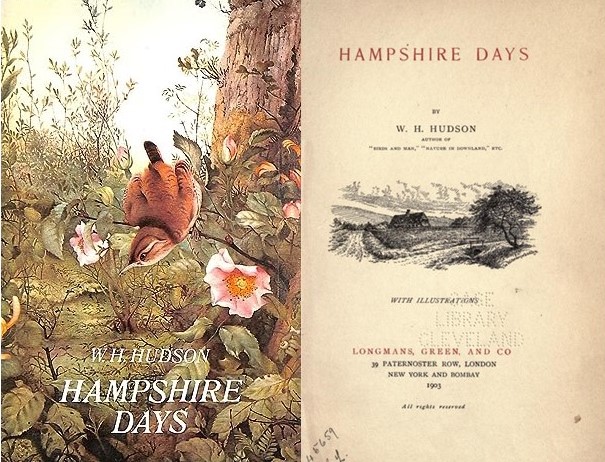
This year marks the 120-anniversary of the publication of a book hailed as a ‘highly influential rural classic’. It was penned by William Henry Hudson (1841-1922), the wildlife activist considered to be the world’s first literary environmentalist. Born and brought up in Argentina, he put foot on England aged 33 to become a leading advocate for the preservation of both South American and British wildlife and cultures. He was a councillor and founding father of the Royal Society for the Protection of Birds (RSPB). In this event organized by the Modern History Research Centre (MHRC), Dr Graciela Iglesias-Rogers will argue that Hampshire Days is not a bucolic account of a by-gone era, but a rallying-call to defend biodiversity and rural heritage shaped by Hudson’s experiences in the Hispanic world – and with strong echoes in the present day. It is the work of an undeclared feminist and a trailblazer respected and admired equally by scientists (ex. Charles Darwin, Alfred Russell Wallace) and writers (Joseph Conrad, Ezra Pound, Ernest Hemingway) and even by creatives in Hollywood. The argument will be presented in conversation with Conor Mark Jameson, a veteran of the RSPB and author of the recently Finding W. H. Hudson: The Writer Who Came to Britain to Save the Birds (London: Pelagic Publishing, 2023) already praised by The Wall Street Journal for being a ‘creative blend of detective work and narrative intuition’ as well as an ‘impeccably researched book’.
Dr Graciela Iglesias-Rogers is Senior Lecturer in Modern European and Global Hispanic History at the University of Winchester and principal investigator of the international research network ‘The Hispanic Anglosphere: Transnational networks and global communities (18th – 20th centuries)’ funded by Arts and Humanities Research Council (AHRC) and running in partnership with the National Trust-Tyntesfield and the Centre of American Studies of the Universidad Adolfo Ibáñez. She is also leading convener of the Modern History Research Centre (MHRC).
Conor Mark Jameson has written for The Guardian, BBC Wildlife, The Ecologist, New Statesman, Africa Geographic, NZ Wilderness, British Birds, Birdwatch and Birdwatching magazines and has been a scriptwriter for the BBC Natural History Unit. He is a columnist and feature writer for the RSPB magazine and has worked in conservation for 20 years, in the UK and abroad.
Everybody is welcome. Book your tickets HERE (including for accessing the Teams link).
Tickets are FREE for all members of the University of Winchester (please register with your university email address), MHRC subscribers (information on how to subscribe HERE) and members of the Hispanic-Anglosphere network. Otherwise, Individual entry cost £6 and £3 for concession.
🙏 Do you want to help us to stand for the pursuance of innovative, rigorous, and independent research in Modern History made accessible to all? Consider giving a Donation (no matter how small), following our YouTube channel and sharing this information with colleagues or students who might be interested in the future of Modern History research. And if you don’t receive it yet, ask to join our mailing list at MHRC@winchester.ac.uk
 The Hispanic-Anglosphere ...