Come and join us in these two hybrid events organized by the Modern History Research Centre (MHRC) of the University of Winchester:
Date: Wednesday 8 November 2023 16:30-18:00 (UK time)
Location: St. Alphege Building 202, King Alfred quarter, University of Winchester and on Teams – Book your tickets HERE
Hampshire Days (1903): wildlife & rural activism from the Hispanic-Anglosphere
Speakers: Dr Graciela Iglesias-Rogers (University of Winchester)
and Conor Mark Jameson (author)

This year marks the 120-anniversary of the publication of a book hailed as a ‘highly influential rural classic’. It was penned by William Henry Hudson (1841-1922), the wildlife activist considered to be the world’s first literary environmentalist. Born and brought up in Argentina, he put foot on England aged 33 to become a leading advocate for the preservation of both South American and British wildlife and cultures. He was a councillor and founding father of the Royal Society for the Protection of Birds (RSPB). In this event organized by the Modern History Research Centre (MHRC), Dr Graciela Iglesias-Rogers will argue that Hampshire Days is not a bucolic account of a by-gone era, but a rallying-call to defend biodiversity and rural heritage shaped by Hudson’s experiences in the Hispanic world – and with strong echoes in the present day. It is the work of an undeclared feminist and a trailblazer respected and admired equally by scientists (ex. Charles Darwin, Alfred Russell Wallace) and writers (Joseph Conrad, Ezra Pound, Ernest Hemingway) and even by creatives in Hollywood. The argument will be presented in conversation with Conor Mark Jameson, a veteran of the RSPB and author of the recently Finding W. H. Hudson: The Writer Who Came to Britain to Save the Birds (London: Pelagic Publishing, 2023) already praised by The Wall Street Journal for being a ‘creative blend of detective work and narrative intuition’ as well as an ‘impeccably researched book’.
Dr Graciela Iglesias-Rogers is Senior Lecturer in Modern European and Global Hispanic History at the University of Winchester and principal investigator of the international research network ‘The Hispanic Anglosphere: Transnational networks and global communities (18th – 20th centuries)’ funded by Arts and Humanities Research Council (AHRC) and running in partnership with the National Trust-Tyntesfield and the Centre of American Studies of the Universidad Adolfo Ibáñez. She is also leading convenor of the Modern History Research Centre (MHRC).
Conor Mark Jameson has written for The Guardian, BBC Wildlife, The Ecologist, New Statesman, Africa Geographic, NZ Wilderness, British Birds, Birdwatch and Birdwatching magazines and has been a scriptwriter for the BBC Natural History Unit. He is a columnist and feature writer for the RSPB magazine and has worked in conservation for 20 years, in the UK and abroad.
Everybody is welcome. Book your tickets HERE (including for accessing the Teams link).
Tickets are FREE for all members of the University of Winchester (please register with your university email address), MHRC subscribers (information on how to subscribe HERE) and members of the Hispanic-Anglosphere network. Otherwise, Individual entry cost £6 and £3 for concession.
——————————————————————–
Date: Wednesday 22nd November, 16:30-18:00 (UK time)
Location:St Alphege Building 202, King Alfred quarter, University of Winchester and on Teams – Book your Tickets HERE
Atomic Agriculture and Insects in Mexico (1950s-1990s)
Speaker: Dr Thomas Rath (UCL)
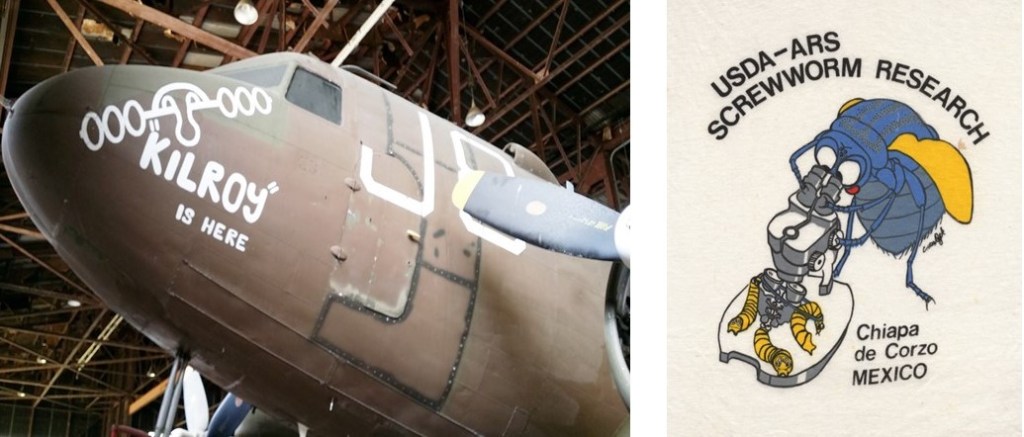
After WWII, atomic agriculture exerted great appeal. Scientists around the world tried to use radiation to hone research, improve seeds, eradicate pests, and fight hunger. In this talk, Dr Thomas Rath will examine this neglected history through an exploration of the international campaign against a notorious pest: the “screwworm” fly, whose flesh-eating larvae kill livestock, wild mammals, and occasionally humans. From the 1950s to the 1990s, the US and Mexican governments bred billions of sterile flies in factories, dropped them from airplanes, faced bafflement and opposition, but eventually eradicated screwworm in North America. It will be argued that this campaign was not simply a product of US power and knowledge. Mexican officials actively shaped it, aided by their own projects of modernization; diplomatic leverage provided by a shared border; and the political and institutional foundations laid by earlier conflicts over disease. Mexico’s experience can help explain why some projects of atomic agriculture succeeded, and others did not.
Dr Thomas Rath is Associate Professor in Latin American History at University College London (UCL). He was educated at UCL, Oxford and Columbia and works on the political, social, military, and environmental history of modern Latin America, particularly Mexico. He is the author of several publications, most recently The Dread Plague and the Cow Killers: The Politics of Animal Disease in Mexico and the World (Cambridge University Press, 2022) that tells the story of an international campaign against a massive outbreak of animal disease in Cold War Mexico.
Chair:Dr Graciela Iglesias-Rogers (University of Winchester).
Everybody is welcome. Book your tickets HERE (including for accessing the Teams link).
Tickets are FREE for all members of the University of Winchester (please register with your university email address) and MHRC subscribers (information on how to subscribe here). Otherwise, Individual entry cost £6 and £3 for concession.
—————–
🙏 Do you want to help us to stand for the pursuance of innovative, rigorous, and independent research in Modern History made accessible to all? Consider giving a Donation (no matter how small), follow our YouTube channel and share this email with colleagues or students who might be interested in the future of Modern History research. And if you don’t receive it yet, ask to join our mailing list at MHRC@winchester.ac.uk
—————————
 The Hispanic-Anglosphere ...